
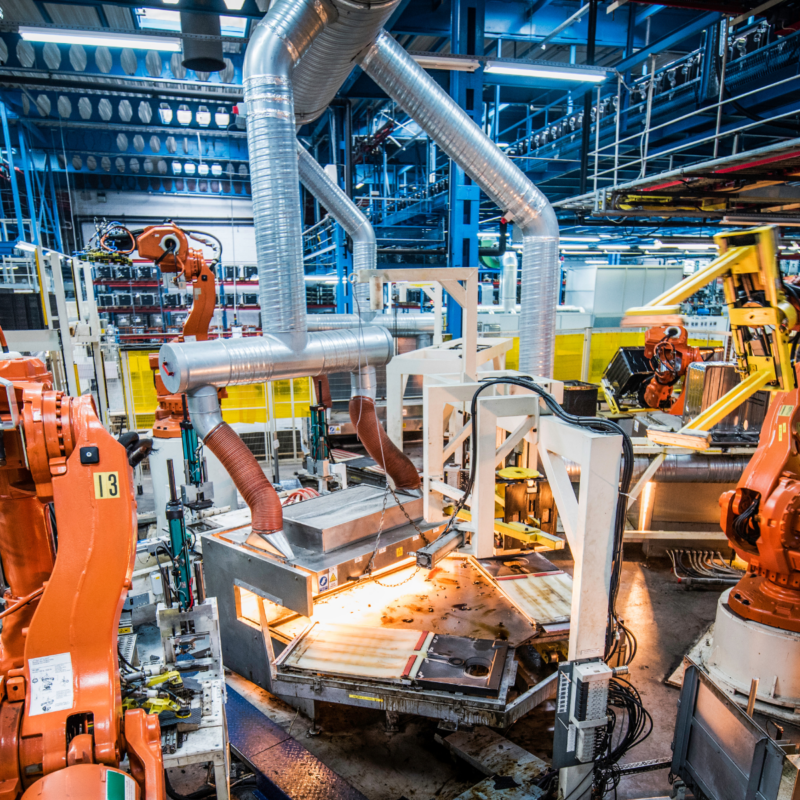
Introduction to Industrial Automation in Chennai
Chennai, a thriving industrial nucleus of South India, has rapidly transformed into a bastion of technological advancement. The city’s manufacturing corridors hum with precision, powered not merely by manpower but by intelligent systems that orchestrate operations with remarkable finesse. Industrial automation is no longer a futuristic indulgence—it is an operational imperative. From automotive giants to small-scale fabrication units, automation has become the silent engine driving consistency, speed, and profitability.
The Evolution of Automation Technologies
Automation has traversed a fascinating trajectory. What began as rudimentary mechanization has evolved into sophisticated ecosystems integrating sensors, controllers, and real-time analytics. Early relay-based systems have given way to programmable logic controllers (PLCs), distributed control systems (DCS), and advanced robotics. Chennai’s industries have embraced this evolution with alacrity, adopting cutting-edge frameworks that allow seamless coordination between machines and software. This progression has not only enhanced productivity but also reduced systemic inefficiencies that once plagued traditional manufacturing.
Core Components of Industrial Automation Systems
At the heart of every automated setup lies a constellation of components working in symphonic harmony. Sensors act as perceptive sentinels, capturing data from the environment. Controllers interpret this data, making instantaneous decisions with algorithmic precision. Actuators then execute these decisions, translating digital commands into physical motion. Human-machine interfaces (HMIs) provide operators with intuitive control panels, while supervisory control and data acquisition (SCADA) systems enable macro-level oversight. Together, these elements create a cohesive and responsive operational architecture.
Enhancing Productivity Through Automation
Productivity, in its purest sense, is the art of achieving more with less. Automation amplifies this principle exponentially. Machines operate tirelessly, unaffected by fatigue or inconsistency. Processes that once required hours can now be completed in minutes with impeccable accuracy. In Chennai’s competitive industrial landscape, this translates to faster turnaround times, reduced wastage, and elevated output quality. The cumulative effect is a robust production pipeline that delivers both volume and value.
Cost Efficiency and Operational Excellence
While the initial investment in automation may appear substantial, the long-term financial benefits are undeniable. Automation minimizes labor-intensive tasks, reduces error-induced losses, and optimizes resource utilization. Predictive maintenance, enabled by data analytics, prevents costly downtime by identifying potential failures before they occur. Over time, these efficiencies coalesce into significant cost savings, allowing businesses to reinvest in innovation and expansion.
Industry Applications Across Chennai
Automation has permeated a diverse array of industries within Chennai. The automotive sector leverages robotic assembly lines for precision manufacturing. Pharmaceutical companies utilize automated systems to maintain stringent quality standards. Textile units employ automation for consistent weaving and dyeing processes. Even food processing industries have adopted automated packaging and quality inspection systems. This widespread adoption underscores the versatility and indispensability of automation across sectors.
Integration of IoT and Smart Technologies
The advent of the Internet of Things (IoT) has added a new dimension to industrial automation. Machines are no longer isolated entities; they are interconnected nodes within a vast digital network. Real-time data flows seamlessly between devices, enabling predictive analytics and informed decision-making. Smart factories in Chennai are leveraging this connectivity to create adaptive systems that respond dynamically to changing conditions. The result is an intelligent ecosystem where efficiency is continuously optimized.
Challenges in Implementing Automation
Despite its myriad advantages, automation is not without challenges. High initial costs can deter small and medium enterprises. The integration of new systems with legacy infrastructure often requires meticulous planning. Additionally, there is a growing need for skilled professionals who can design, operate, and maintain these complex systems. Cybersecurity concerns also loom large, as increased connectivity exposes systems to potential vulnerabilities. Addressing these challenges requires strategic foresight and sustained investment.
Future Prospects of Industrial Automation in Chennai
The future of automation in Chennai is both promising and exhilarating. Emerging technologies such as artificial intelligence, machine learning, and collaborative robots are set to redefine industrial paradigms. Factories will become increasingly autonomous, capable of self-optimization and adaptive learning. Government initiatives and industrial policies are further catalyzing this transformation, fostering an environment conducive to innovation. Chennai is poised to emerge as a global hub for smart manufacturing.
Conclusion:
Powering Productivity Through Innovation
Industrial automation systems have become the cornerstone of modern manufacturing in Chennai. They encapsulate the essence of progress—efficiency, precision, and scalability. By harnessing the power of automation, industries are not merely enhancing productivity; they are redefining the very fabric of operational excellence. In a world where competitiveness is relentless, automation stands as the definitive catalyst propelling Chennai’s industries toward a future of unparalleled productivity and innovation.